What is Rubric-Based AI Grading? 3 Key Differences
Impression-based grading causes subjective bias. Learn how Answer Sheet Evaluation applies exact criterion rubrics consistently across every paper.
Grading handwritten exams takes weeks. Answer Sheet Evaluation by BigChalkBox processes a 500-student batch in under 15 minutes while faculty retain full approval control.
A scalable evaluation process does more than just award marks. It ensures consistency, traceability, and speed across hundreds of scripts.
| Component | Why it matters | Example |
|---|---|---|
| Digitization | Removes logistical delays of moving physical papers | Scanning 500 scripts directly into the system |
| Rubric definition | Ensures every evaluator grades identically | 2 marks for formula, 3 for calculation |
| Automated scoring | Eliminates the repetitive reading of standard answers | AI pre-scoring basic definitions instantly |
| Human review | Maintains academic integrity and handles edge cases | Faculty approving or overriding AI scores |
| Real-time tracking | Gives exam controllers visibility into progress | Dashboard showing 450/500 sheets completed |
The goal is simple: reduce the administrative friction of grading so faculty can focus solely on academic judgment.
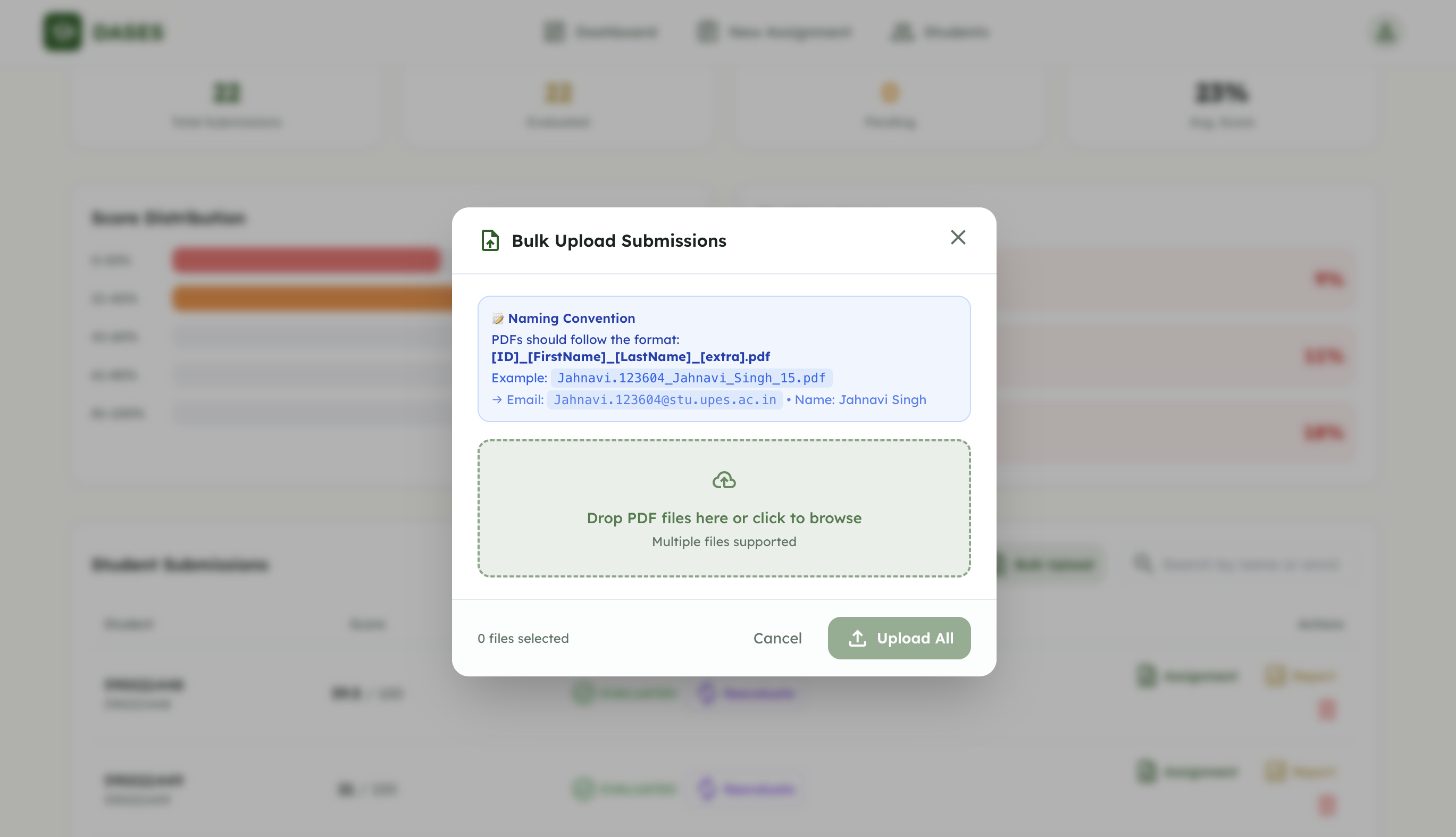
Faculty upload scanned answer sheets to begin an evaluation session. Supported formats: PDF, JPG, ZIP.
The traditional evaluation process loses days just moving bundles of physical answer sheets between examination centers and faculty desks. The first step to faster grading is immediate digitization.
Instead of waiting for physical transit, universities should scan answer sheets into secure PDFs as soon as the exam concludes. This creates a tamper-proof digital record and allows evaluation to begin instantly, regardless of where the faculty members are located.
For instance, scanning a batch of 500 answer sheets using a high-speed scanner takes less than an hour, instantly eliminating days of logistical delays.
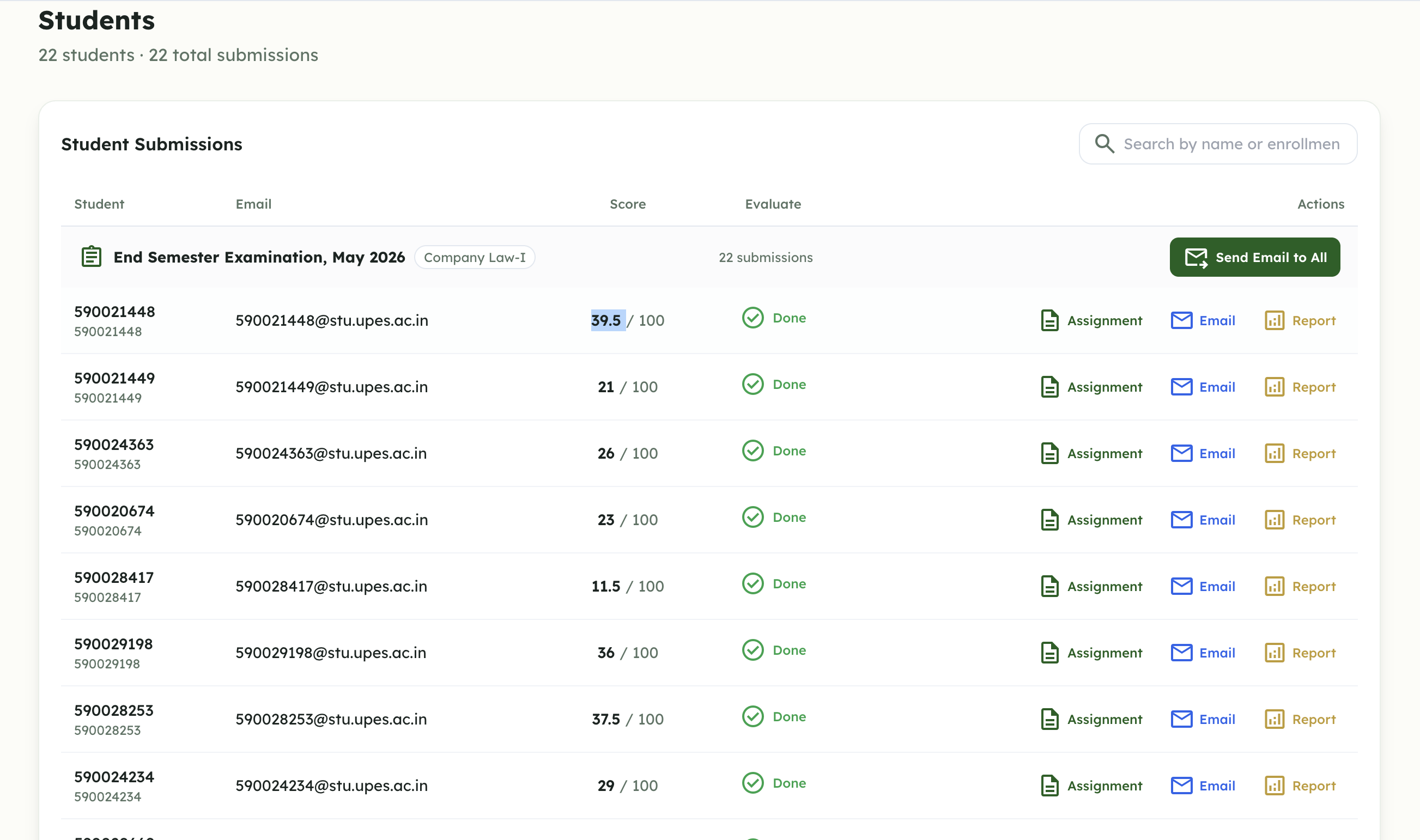
Faculty review every AI-generated score before results are published. Overrides happen in one click.
Speed in grading often leads to subjective, impression-based scoring, which causes student disputes. To grade faster without losing accuracy, faculty must define a strict rubric before opening the first answer sheet.
A rubric-based evaluation breaks down a 10-mark question into markable elements. Instead of deciding if an answer "feels like an 8," the evaluator awards specific marks for the definition, the diagram, and the conclusion. This removes the cognitive load of subjective decision-making, allowing the evaluator to grade significantly faster.
A clear rubric also ensures that paper #1 and paper #500 are evaluated against the exact same standard.
Once the rubric is defined, the repetitive work of reading standard, expected answers can be automated. This is where significant time is saved.
Instead of a faculty member reading 500 identical definitions, AI can map the handwritten responses against the rubric criteria. For example, if the rubric awards 2 marks for a specific legal definition, the AI scans all 500 scripts, identifies the presence of that definition (even if paraphrased), and proposes the score.
This step alone can reduce a 125-hour grading workload to mere minutes of processing time, which is why AI grading outperforms manual evaluation in speed and consistency.
The fastest way to grade is to stop reading what the AI has already verified and start reviewing only the final proposed scores and edge cases.
Faculty are presented with the AI's proposed score alongside the student's handwritten snippet. The faculty member simply clicks 'Approve' or adjusts the score if the student provided a highly unconventional but valid argument.
This shifts the faculty's role from a clerical reader to an academic auditor, making the process exponentially faster while maintaining absolute control.
AI can significantly improve the speed and consistency of evaluation, but it should not replace academic responsibility. Faculty members must approve the final scores, especially for complex, interpretive, or highly creative answers.
AI tools can help propose scores, identify missing mark components, and flag anomalies. For example, Answer Sheet Evaluation by BigChalkBox processes a 500-student batch in under 15 minutes, but institutions can evaluate large cohorts consistently only because faculty retain full approval control over every single mark awarded.
The best approach is human-in-the-loop. Let AI reduce repetitive work and highlight risks, while subject experts make final academic decisions.
Many evaluation delays come from outdated processes rather than a lack of faculty effort. The most common problems are preventable.
Each of these mistakes can create avoidable delays. More importantly, they can compromise the accuracy of the final published results.
Before deploying a faster evaluation process, use this checklist to confirm that the system is ready.
| Checkpoint | Yes or no |
|---|---|
| Scanning infrastructure is tested and secure | |
| Rubrics are defined and approved by the course coordinator | |
| Evaluators are trained on the digital review interface | |
| The AI scoring system has been calibrated with sample sheets | |
| A clear override and review process is documented |
If even two or three of these items are missing, the evaluation process may still function, but it is more likely to produce bottlenecks.
A streamlined evaluation process is one of the simplest ways to improve institutional efficiency. It helps faculty grade consistently, reduces administrative overhead, supports NAAC documentation, and gives examination teams better control over large-scale exam cycles.
If your university wants to connect question paper generation, answer key preparation, and grading into a more consistent workflow, explore how institutions can manage answer sheet evaluation at scale or book a free demo to see how AI-assisted examination workflows can support faster, fairer assessment.